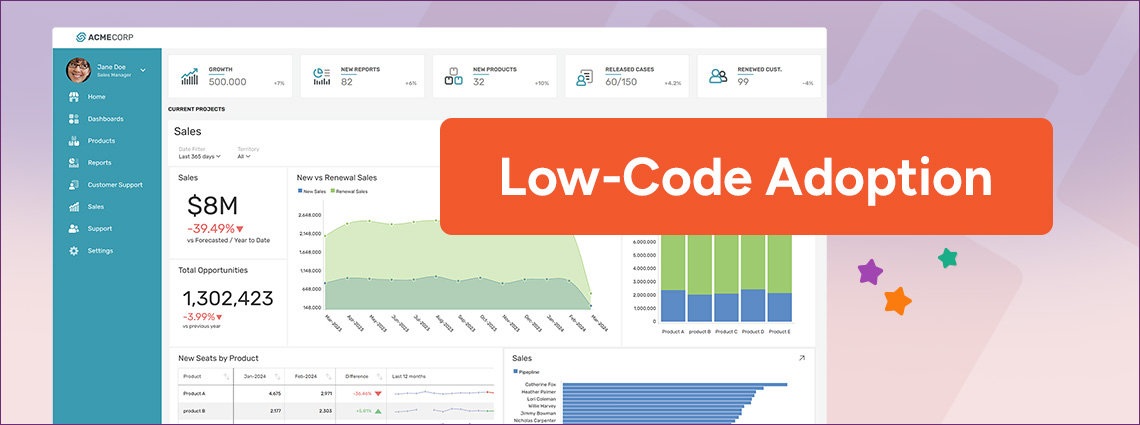
Low code has become a catalyst for rapid digital transformation in companies of different sizes and industries. These tools see steady growth in their impact on business—from remodeling the entire corporate culture that implements rigid structures focused on traditional workflows to establishing innovative hubs that are more agile and prepared for any market change.
Can AI promote faster software rollouts? Will it lead to fewer people who write code manually? And is this the end of software development as we know it? Let’s see what’s the impact of AI on development jobs and what’s the role of low code here.
App Builder is a low-code platform that can provide your organization with the flexibility, security, and features you need for building an MVP quickly and at a fraction of the cost of traditional development. But how to do it step by step? Read here.
Low-code platforms come with security concerns. But these shouldn’t stop you from taking advantage of low-code technology and benefiting from accelerated application development with little or no coding knowledge. Instead, you should understand the key low-code challenges and risks and implement appropriate mitigation strategies.
When building Proof of Concept software using a low-code platform, the focus is on scalability – and not just cost-efficiency. So, it doesn't simply reduce the app development costs, but it equally reduces the overall development and iteration time.
C-level executives are trying to navigate between the need for rapid innovation and the resource constraints of their overstretched IT departments. Are citizen developers the solution to this and other major bottlenecks? And can low-code app development empower them and increase business agility? Read here.
According to low-code statistics by Forrester, “91% of IT and business decision makers responsible for digital transformation initiatives at enterprises in the US, the UK, Canada, and Australia use low code to improve existing IT capabilities to promote agility and innovation.” And now, they are used as tools to improve developer productivity too. But how?
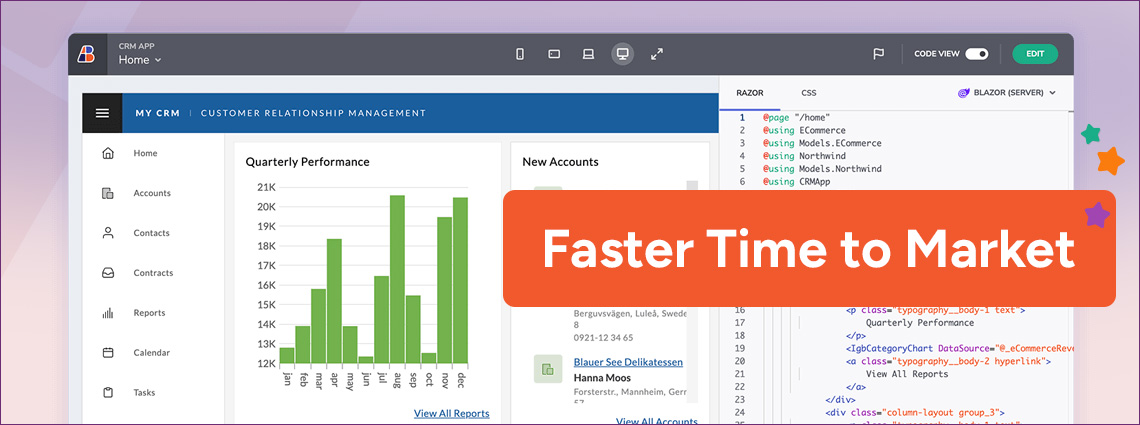
By embracing low code and democratizing app development, companies can fundamentally transform the way their businesses operate, enabling faster, more agile product development and achieving shorter time to market. But why is this important?
CTOs, CIOs, Dev Team Leaders and other high-level executives must make informed decisions when choosing between low code vs. traditional development. And this article will compare these two approaches, focusing on different tradeoffs, advantages, criteria, and more.